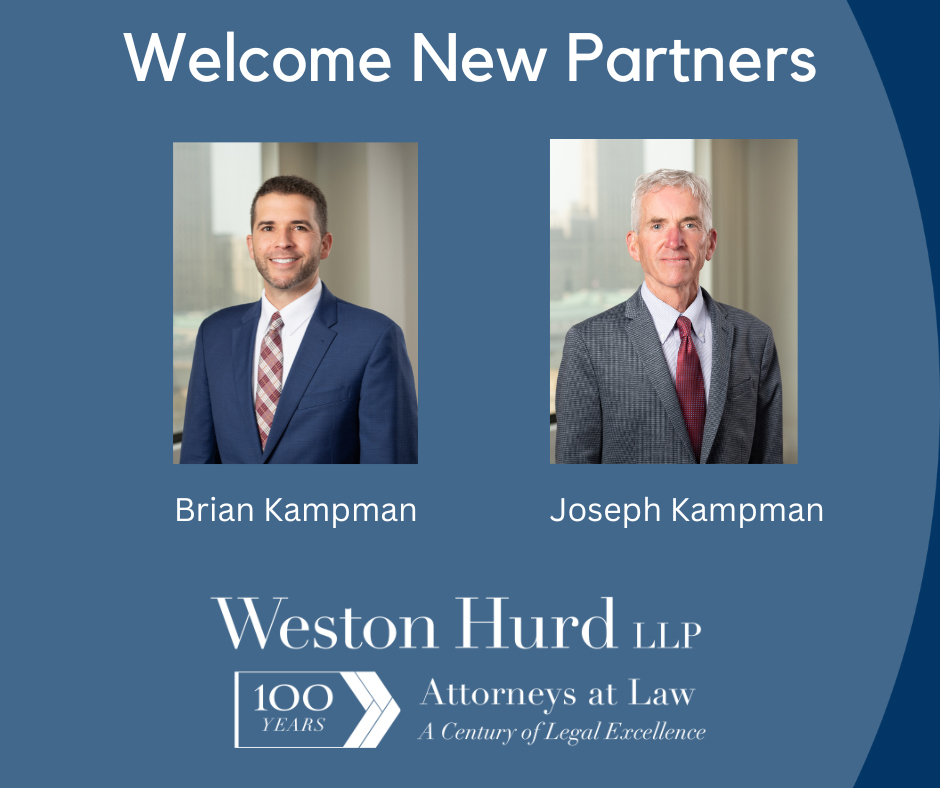
Weston Hurd is pleased to welcome new partners Brian Kampman and Joseph Kampman who bring a wealth of experience in estate planning, probate and estate litigation, trust and estate administration, commercial litigation, and general corporate law.
Brian Kampman represents individuals, fiduciaries and non-profit organizations in matters such as will and trust contests, misappropriation of funds and fiduciary malfeasance, beneficiary disputes, and fiduciary litigation. He also represents privately owned business entities in litigation, contract review, shareholder/owner disputes, real estate, succession planning, and management of litigation exposure.
Joe Kampman represents individuals and families, young professionals and entrepreneurs, physicians, dentists, and other medical professionals. He also advises business owners in legal matters including contract review, shareholder disputes, buy-sell agreements, mergers and acquisitions, and business succession planning.

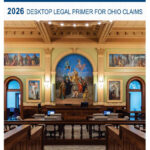
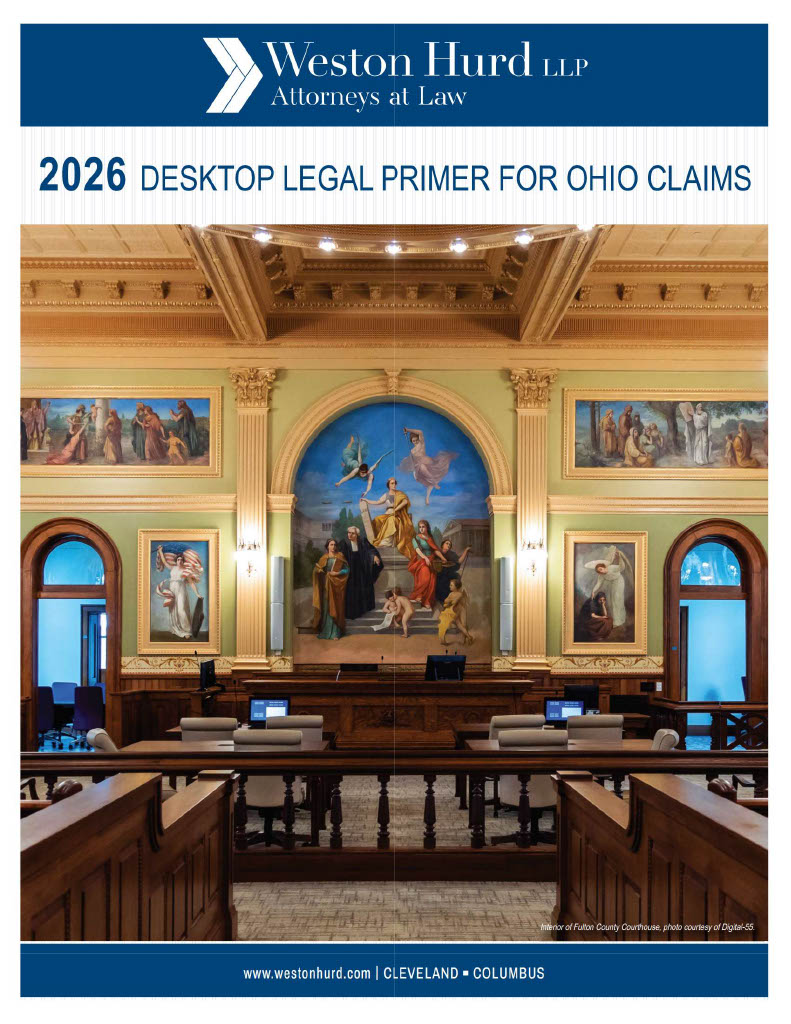
 Weston Hurd’s 2026 Desktop Legal Primer for Ohio Claims serves as a comprehensive go-to-guide and useful reference tool. Researched and written by Weston Hurd attorneys, the Primer contains Ohio statutes, case citations, and covers topics involving:
- Claim Limitation Periods – Statutes of Limitation; Product Liability Statute of Repose; Construction Statute of Repose; Legal Malpractice Statute of Repose; Employment Discrimination Claims; Employment Law Claims
- Employer Intentional Tort
- Employment Practices
- Damages – Caps on Non-Economic (Pain and Suffering) Damages; Caps on Punitive Damages; Damage to Real Property; Damage to Personal Property; Admissibility of “Writedown” of Medical Bills; Evidence of Collateral Benefits Paid to Plaintiff; Prejudgment and Post Judgment Interest; Parental Liability; Settlement of a Claim by a Minor; Statutory Damages; Vicarious Liability
- Negligence
- Joint and Several Tort Liability
- Contribution, Indemnity and Effect of a Payment and Release
- Automobile Insurance – Mandatory Liability Limits; Insurance for Transportation Network Company Gigs; Pro-rata v. Excess Coverage; UM/UIM Coverage; Seatbelt, Protective Eye Device and Protective Helmet Use Requirements and Admissibility; Child Safety Restraint Requirements and Admissibility
- Declaratory Judgment Actions – Joinder; Insurer’s Coverage Defenses Against Supplemental Petitions
- Insurance Coverage – Construction Defect Claims; Product Claims; Intentional Torts; Employer Intentional Tort; Punitive Damages; Allocation; Retroactive Cancellation of Liability Insurance; Contract Void Ab Initio; Jurisdiction; Claims Against Insurance Agents/Brokers; Limitation of Action Provisions; Attorney Fees in Declaratory Judgment Actions; Waiver and Estoppel; Examination Under Oath; Ohio Supreme Court Insurance Coverage Decisions in 2024
- Subrogation and Liens – The Make Whole Doctrine; Workers’ Compensation Subrogation; Ohio Medicaid Subrogation; Federal Medicare Subrogation
- Ohio Fair Claims Practices Act – Unfair Property/Casualty Claims; Settlement Practices
- Worksite Accidents
- Key Time Requirements in Ohio State Court Under Ohio Civil Rules
- Key Time Requirements Under Federal Civil Rules
- Key Time Requirements Under Federal Statutes
- Time for Filing Appeals to Courts of Appeals from Trial Courts of Record in Ohio
- Time for Filing Appeals to Ohio Supreme Court
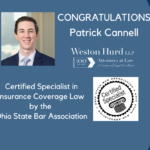
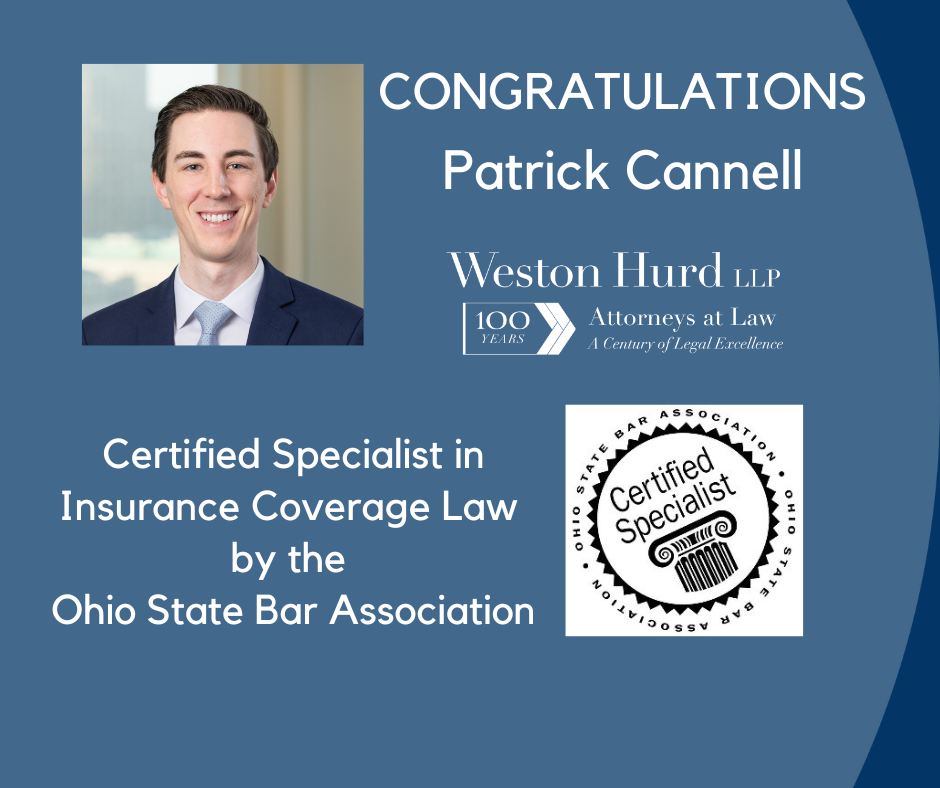
Congratulations to Weston Hurd partner Patrick Cannell on becoming a Certified Specialist in Insurance Coverage Law by the Ohio State Bar Association. Patrick joins a group of only 21 attorneys certified in this practice area in the state of Ohio.
According to OSBA, “Ohio Bar certification demonstrates a commitment to excellence in your prescribed field of practice. Ohio attorneys who become a certified specialist by the Ohio Bar have displayed a high level of expertise in their field of practice. This expertise is substantiated by the passage of a written examination, measurable involvement in the specialty area, fulfillment of ongoing education requirements and positive evaluation by other attorneys and judges familiar with their work.”
Read more about all the newly OSBA certified specialists: https://www.ohiobar.org/about-us/media-center/osba-news/2026-releases/ohio-bar-certifies-17-new-attorney-specialists/
On June 5, 2025, in Ames v. Ohio Dep’t of Youth Servs., 221 L. Ed. 2d 929 (2025), the United States Supreme Court rejected the Sixth Circuit’s rule that a majority group plaintiff in a “reverse discrimination” Title VII case must present evidence of “background circumstances” that the plaintiff’s employer is the “unusual” employer that “discriminates against the majority” in order to meet their initial burden under the McDonnell Douglas framework.
In a unanimous opinion, the Court reasoned that Title VII’s disparate treatment provision draws no distinction between majority group plaintiffs and minority group plaintiffs. The Court emphasized that the provision establishes protection for every individual without regard to the individual’s membership in a majority or minority group, and that Congress did not intend to impose specific requirements on majority group plaintiffs. Instead, Title VII’s protections are available to “any individual” when experiencing an adverse employment action based on protected characteristics.
As a result of this decision, employers should be aware that there is no heightened burden for majority group plaintiffs when they bring a claim under Title VII of the Civil Rights Act. Rather, majority and minority group plaintiffs are subject to the same standard. This ruling may result in an increase in Title VII litigation from majority group plaintiffs.
For more information about this decision, please contact Rina Russo or one of the other employment law attorneys at Weston Hurd LLP.
Weston Hurd pleased to announce that Patrick Cannell and Brad Zebedis have been named partners.
Patrick Cannell focuses his practice on insurance matters involving coverage and general liability defense. He is a frequent presenter on insurance coverage topics including case law updates, risk transfer, and business interruption claims. Learn more at: Patrick M. Cannell – Weston Hurd
Brad Zebedis provides legal counsel to clients in matters involving education law and labor and employment. In addition to providing day-to-day counsel, Brad represents public sector clients before a variety of arbitrators, boards, and administrative agencies. He also provides guidance in all stages of collective bargaining. In the private sector, Brad provides general counsel to employers and defends employers before the NLRB. Learn more at: Brad M. Zebedis – Weston Hurd
Congratulations Patrick and Brad on this well-deserved recognition!

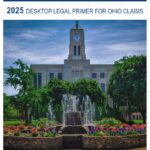
Weston Hurd’s 2025 Desktop Legal Primer for Ohio Claims serves as a comprehensive go-to-guide and useful reference tool. Researched and written by Weston Hurd attorneys, the Primer contains Ohio statutes, case citations, and covers topics involving:
- Claim Limitation Periods – Statutes of Limitation; Product Liability Statute of Repose; Construction Statute of Repose; Legal Malpractice Statute of Repose; Employment Discrimination Claims; Employment Law Claims
- Employer Intentional Tort
- Employment Practices
- Damages – Caps on Non-Economic (Pain and Suffering) Damages; Caps on Punitive Damages; Damage to Real Property; Damage to Personal Property; Admissibility of “Writedown” of Medical Bills; Evidence of Collateral Benefits Paid to Plaintiff; Prejudgment and Post Judgment Interest; Parental Liability; Settlement of a Claim by a Minor; Statutory Damages; Vicarious Liability
- Negligence
- Joint and Several Tort Liability
- Contribution, Indemnity and Effect of a Payment and Release
- Automobile Insurance – Mandatory Liability Limits; Insurance for Transportation Network Company Gigs; Pro-rata v. Excess Coverage; UM/UIM Coverage; Seatbelt, Protective Eye Device and Protective Helmet Use Requirements and Admissibility; Child Safety Restraint Requirements and Admissibility
- Declaratory Judgment Actions – Joinder; Insurer’s Coverage Defenses Against Supplemental Petitions
- Insurance Coverage – Construction Defect Claims; Product Claims; Intentional Torts; Employer Intentional Tort; Punitive Damages; Allocation; Retroactive Cancellation of Liability Insurance; Contract Void Ab Initio; Jurisdiction; Claims Against Insurance Agents/Brokers; Limitation of Action Provisions; Attorney Fees in Declaratory Judgment Actions; Waiver and Estoppel; Examination Under Oath; Ohio Supreme Court Insurance Coverage Decisions in 2024
- Subrogation and Liens – The Make Whole Doctrine; Workers’ Compensation Subrogation; Ohio Medicaid Subrogation; Federal Medicare Subrogation
- Ohio Fair Claims Practices Act – Unfair Property/Casualty Claims; Settlement Practices
- Worksite Accidents
- Key Time Requirements in Ohio State Court Under Ohio Civil Rules
- Key Time Requirements Under Federal Civil Rules
- Key Time Requirements Under Federal Statutes
- Time for Filing Appeals to Courts of Appeals from Trial Courts of Record in Ohio
- Time for Filing Appeals to Ohio Supreme Court
On November 15, 2024, a Texas federal district court set aside and vacated the U.S. Department of Labor’s final rule that substantially increased the minimum salary threshold for employees who are classified as exempt under the executive, administrative, and professional exemptions. As discussed in a prior alert, the DOL issued the rule in April 2024, and it increased the salary basis for such exemptions from $684/week to $844/week in July 2024, with another increase to $1,128/week scheduled for January 2025, and further automatic index increases beginning in July 2027. The rule also increased the salary level for the highly compensated employee exemption.
As a result of this decision, employers will not need to adjust salaries in January 2025 to comply with the vacated rule, and the minimum salary level will return to the amount in effect prior to the DOL’s final rule – $684/week ($35,568/year) for executive, administrative, and professional exemptions; and $107,432/year for the highly compensated employee exemption.
The court reasoned that the DOL’s new rule exceeded its authority under the FLSA because it effectively displaced the FLSA’s duties test with a predominant salary-level test for a significant percentage of otherwise exempt employees. The DOL has the option to appeal the decision to the 5th Circuit Court of Appeals, but the upcoming change in presidential administrations makes it unlikely that the DOL will seek to revive the rule.
For more information about this decision regarding the salary threshold for exempt employees, please contact Russell Rendall or one of the other employment law attorneys at Weston Hurd LLP.
Weston Hurd LLP is honored to be named by Best Lawyers® in its 2025 “Best Law Firms” rankings in both national and metropolitan categories.
According to Best Lawyers, “Our Best Law Firms rankings are based on a rigorous evaluation process that includes the collection of clients and professional reference evaluations, peer review from leading attorneys, industry leader interviews and review of additional firmographic highlights provided by law firms as part of the formal research submission process.”
Overall, Weston Hurd garnered 15 practice rankings, including a National ranking in Insurance Law and Tier 1 Metropolitan rankings in:
- Commercial Litigation (Cleveland)
- Construction Law (Columbus)
- Education Law (Cleveland)
- Insurance Law (National and Cleveland)
- Litigation-Labor & Employment (Cleveland)
- Medical Malpractice Law-Defendants (Columbus)
- Personal Injury Litigation-Defendants (Columbus)
The depth and breadth of Weston Hurd’s practice areas was further distinguished with metropolitan rankings in employment law-management, labor law-management, medical malpractice law – defendants, personal injury litigation-defendants, personal injury litigation-plaintiffs, product liability litigation-defendants, and real estate law.
The full list of Weston Hurd’s rankings include:
National
Metropolitan
- Commercial Litigation (Cleveland, Tier 1)
- Construction Law (Columbus, Tier 1)
- Education Law (Cleveland, Tier 1)
- Insurance Law (Cleveland, Tier 1)
- Litigation – Labor & Employment (Cleveland, Tier 1)
- Medical Malpractice Law – Defendants (Columbus, Tier 1; Cleveland, Tier 3)
- Personal Injury Litigation – Defendants (Columbus, Tier 1; Cleveland Tier 2)
- Employment Law – Management (Cleveland, Tier 2)
- Product Liability Litigation – Defendants (Columbus, Tier 2)
- Labor Law – Management (Cleveland, Tier 3)
- Personal Injury Litigation – Plaintiffs (Cleveland, Tier 3)
- Real Estate Law (Cleveland, Tier 3)